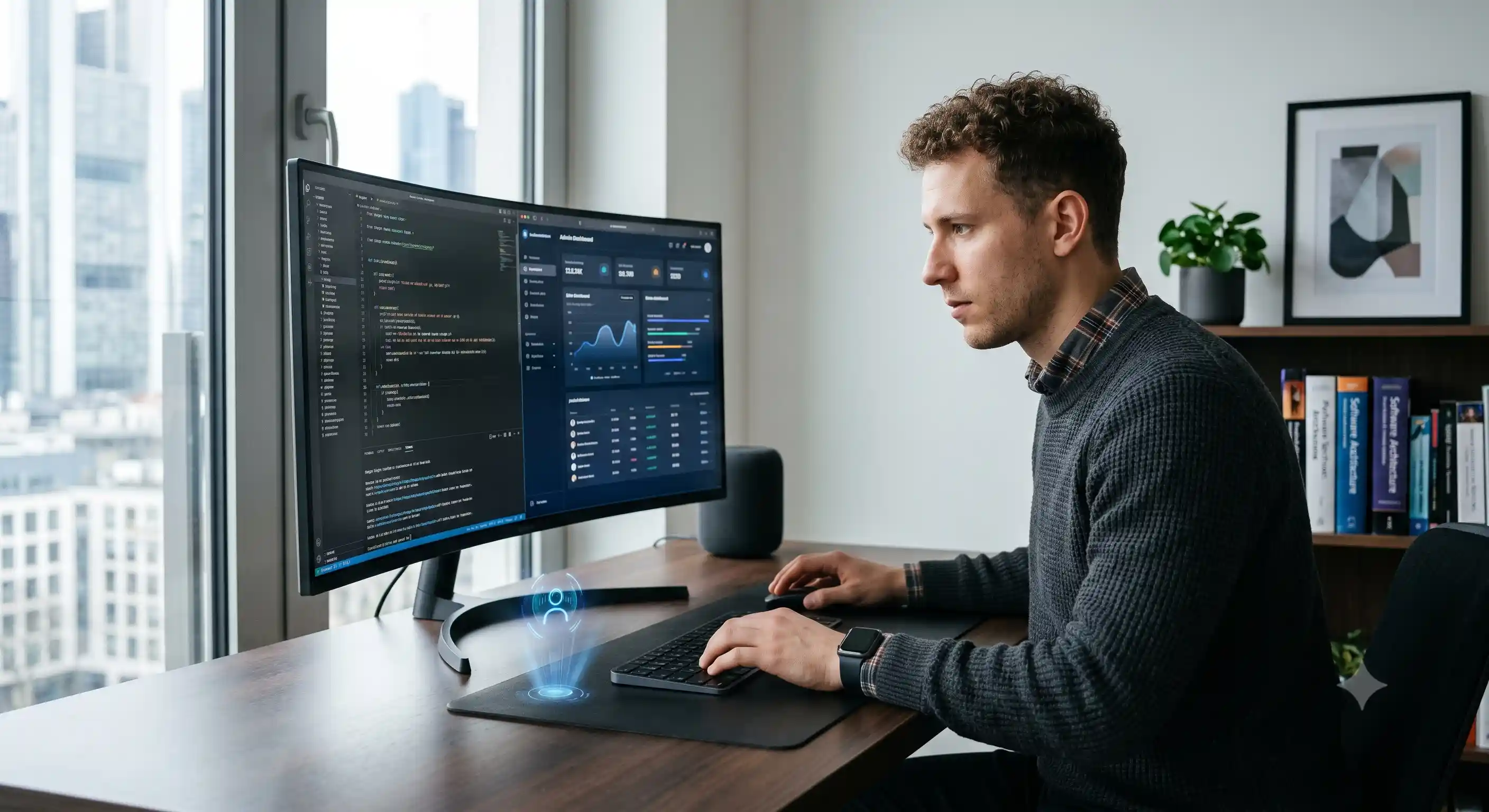
1 The New Era: Transition from Coding to System Architecture
Until just a few years ago, a large part of our daily time was spent writing repetitive code, doing initial Webpack configurations, or wrestling with simple front-end features. Today, in 2026, smart assistants perform these routine tasks in a fraction of a second. But this never means the end of the developers' job; rather, our role has undergone a massive change:
🛠 Traditional Programming (Past)
The main focus was on writing syntax, manually implementing routine front-end sections, and manually solving spelling and typing errors in repetitive code.
🚀 Intelligent System Architecture (2026)
Complete focus on designing complex data structures, integrating intelligent agents, optimizing network layers, and guiding scalable architectures.
If one day our success was measured by typing speed and memorizing syntax, today everything comes down to analytical power and how the entire system is engineered.
2 Coexistence with AI: Assistance at the Operating System Layer
As someone who writes code every day in this turbulent ocean, I have learned that artificial intelligence is not my competitor, but my wings for flight. Today we have smart assistants that go beyond simple text code; they interact with operating system directories, track prices and inventory, and take over the monitoring of background tasks.
This huge change allows us to step away from repetitive tasks and focus our attention on creating dynamic tools and precisely optimizing infrastructures. AI delivers raw code, but understanding how to arrange these pieces to build a cohesive and secure whole is still up to the programmer.
3 Golden Skills That No Algorithm Can Copy
To shine in the bustling job market of 2026, we must invest in skills that machines are still very far from truly understanding:
- Strategic Thinking and Business Understanding: AI does not know the difference between a novelty feature and a vital capability. Designing complex business scenarios, such as multi-tiered subscription models for sustainable revenue, requires intelligence and a deep understanding of the business.
- Deep and Unexpected Troubleshooting: When faced with an unusual disruption in the WebSockets layer or a drop in database performance under heavy traffic loads, large language models usually give clichéd answers. Solving these bugs requires human experience, intuition, and expertise.
- User Empathy: Feeling comfortable when working with a complex management dashboard, color psychology, and animation dynamics are things that cannot be achieved based on pure statistics; these stem from the programmer's emotional understanding of the real needs of the end-user.
4 The Evolution of Frameworks and Engineering Modern SaaS Platforms
The old debates about whether the React framework is better or Vue have given way to deeper convergences. In 2026, modern web frameworks are natively integrated with Edge-focused cloud processing and hybrid Server-Side Rendering (SSR).
The development of Software as a Service (SaaS) platforms has reached its peak of dynamism today. We work with frameworks that can automatically pre-load the codes of the next sections of the page based on the user's behavioral patterns and build personalized, real-time management dashboards. Our real skill is conducting this grand orchestra of smart frameworks and securely connecting various APIs together.
5 The Professional Development Path for Web Professionals in 2026
- Deepening into Design Patterns and advanced software architecture concepts.
- Learning advanced interaction with LLMs and integrating intelligent agents (AI Agents) into web applications.
- Special focus on engineering complex user interfaces, real-time data monitoring, and interactive admin panels.
- Understanding web business models, pricing scenarios, and database optimization methods under heavy loads.
✓ Conclusion: Welcome to the Golden Age of the Web
Web programming has never died, but rather has entered its most dynamic period of evolution. We have crossed the hurdle of repetitive tasks so we can spend our time and focus on the biggest part of the job, which is "creativity and problem-solving." By embracing new AI tools and upgrading our skills as a system architect, 2026 can be the most exciting and lucrative era of our careers.