3 Hidden Technical Reasons Shoppers Abandon Your Site
Sajjad Askari
5 min read
E-Commerce Development
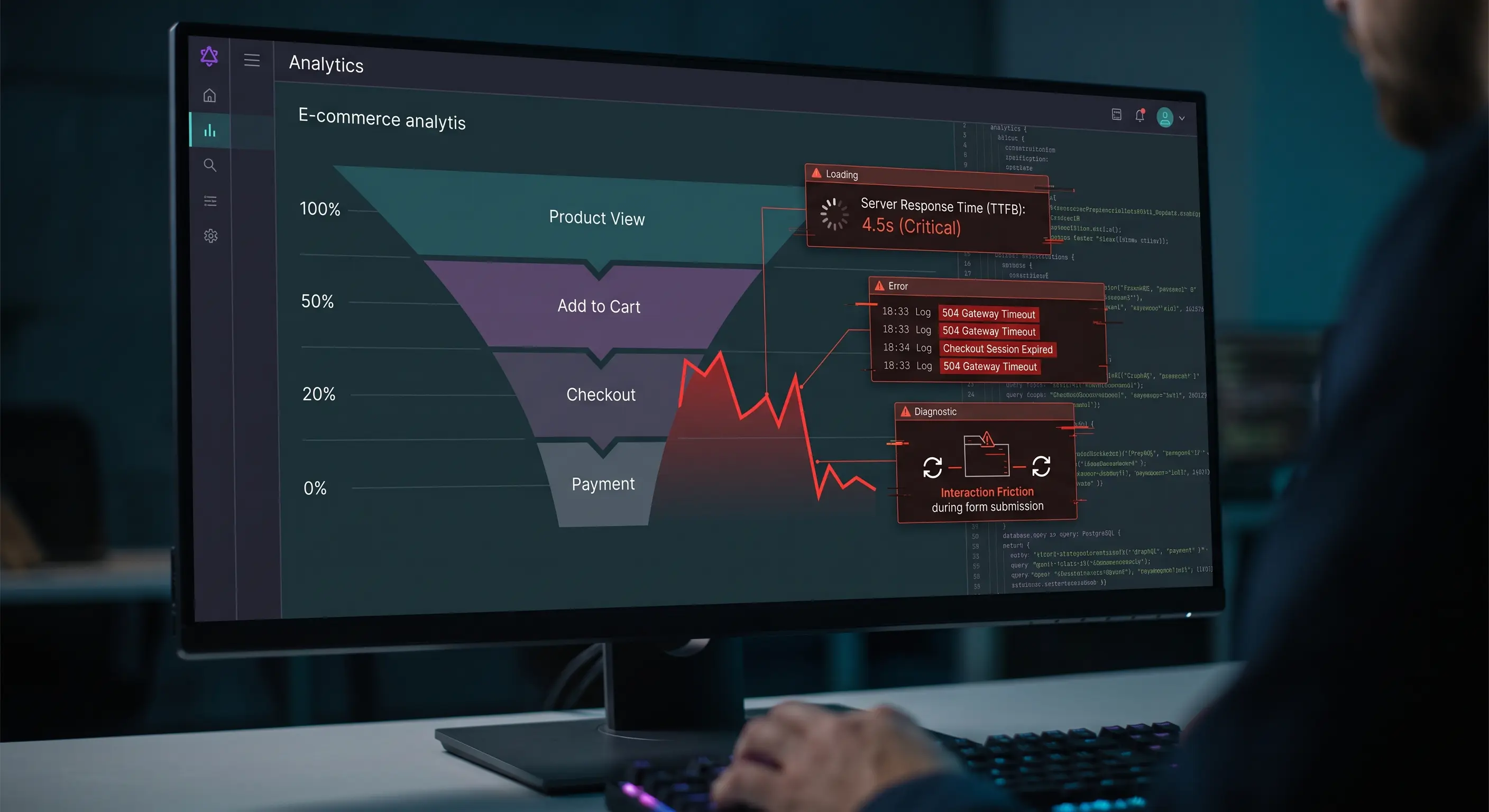
You spend a fortune on SEO, PPC, and social campaigns to drive traffic. Users land on your site, love the product, but close the tab right before checkout. Globally, cart abandonment sits above 70%. While managers obsess over pricing or site graphics, the silent killer of conversion rates is hidden technical bottlenecks. In this article, we explore three structural bugs hiding in standard templates and provide engineering solutions to fix them.
1. Time to First Byte (TTFB) and the 3-Second Rule
When a customer clicks a product link, they expect to see the page in under two seconds. In traditional CMS platforms (like WordPress with heavy plugins), the server has to query the database and process scripts for every click. This causes severe TTFB delays. A blank loading screen for 3 seconds directly translates to a lost customer.
Our Technical Solution: Utilizing Server-Side Rendering (SSR) with Next.js. In this architecture, pages are pre-processed on the server and delivered instantly to the browser. This drastically lowers bounce rates and signals top-tier speed to Google's crawlers.
2. Friction in Product Filtering and Search
Imagine a user in the "Laptops" category. They select the "Apple" filter; the page refreshes. They check "In Stock"; another refresh. This constant UI friction drains the buyer's cognitive energy, pushing them to abandon the search entirely.
Our Technical Solution: Developing a real-time search system using Debounce logic. Buyers can apply dozens of filters, and the results update instantly without a single page reload—mimicking a native mobile app experience.
3. Backend Collapse at Checkout (Timeouts)
The worst type of abandonment happens when the customer is ready to pay. During high-traffic sales, weak databases and shared servers suffer from deadlocks. The user clicks "Pay", but the server fails to handle parallel requests, resulting in a Timeout error. In 90% of cases, that customer never returns.
Our Technical Solution: Deploying an event-driven backend like NestJS alongside enterprise-grade relational databases like PostgreSQL. This guarantees that thousands of concurrent transactions are processed securely and swiftly without locking up the system.
Does your site slow down during high-traffic days?
Rooting out these problems cannot be done by simply installing a cache plugin. To rescue your ad budgets and visibly boost sales, migrating to a custom, line-by-line coded architecture is essential. Submit a consultation request below to have your current setup evaluated and learn how to upgrade to a robust modern infrastructure.